
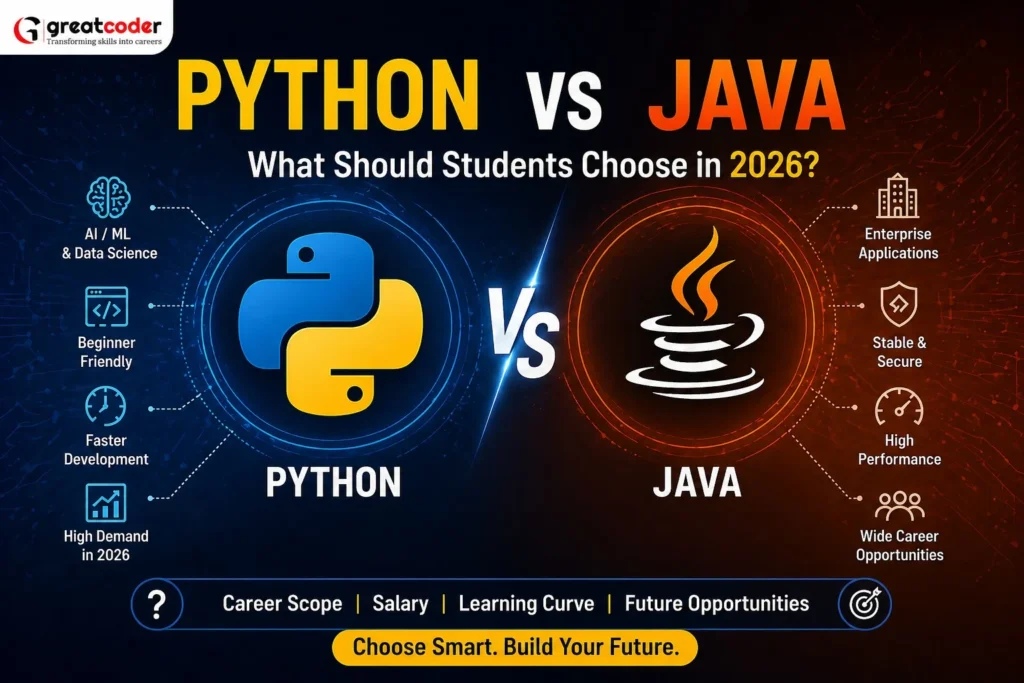
Python vs Java: What Should Students Choose in 2026?
Choosing between Python and Java is not a small decision. It directly affects your learning speed, job opportunities, and long-term career path. Most students make this decision blindly by following trends or friends. That is a mistake.
If you’re serious about building real skills instead of just learning theory, getting proper guidance early makes a big difference. You can explore a Python course in Hyderabad that focuses on practical projects and job-ready skills.
Why This Decision Matters in 2026?
The tech industry is shifting fast. AI, automation, cloud, and scalable systems are dominating hiring trends. Companies are not just looking for coders. They want problem solvers who can work with modern stacks.
Python and Java both have strong positions. But they serve different purposes.
If you choose wrong, you waste time. If you choose right, you accelerate your career.
What is Python?
Python is a high-level, interpreted programming language known for simplicity and readability.
Key Features of Python
- Easy syntax, beginner-friendly
- Dynamically typed
- Huge library ecosystem
- Strong in AI, ML, and data science
- Faster development cycle
Where Python is Used
- Artificial Intelligence and Machine Learning
- Data Science and Analytics
- Automation and scripting
- Web development (Django, Flask)
- Cybersecurity
What is Java?
Java is a compiled, object-oriented programming language built for performance and scalability.
Key Features of Java
- Strongly typed language
- Platform independent (Write Once, Run Anywhere)
- High performance
- Secure and stable
- Used in large-scale systems
Where Java is Used
- Enterprise applications
- Banking and financial systems
- Android app development
- Backend systems (Spring Boot)
- Large-scale distributed systems
Python vs Java: Core Differences
1. Learning Curve
Python is easier. You can start building projects in days.
Java is strict. It forces you to understand core concepts like OOP properly.
Reality:
If you struggle with logic, Python helps you start. Java builds stronger fundamentals.
2. Performance
Java is faster because it is compiled.
Python is slower but acceptable for most use cases.
Reality:
Performance matters only in large systems. Beginners should not prioritize this first.
3. Job Market Demand in 2026
Both have demand, but in different sectors.
- Python → AI, Data Science, Automation
- Java → Enterprise, Backend, Banking
Reality:
Python jobs are growing faster. Java jobs are more stable.
4. Salary Comparison
- Python developers: High demand in AI roles → higher average salaries
- Java developers: Consistent demand → stable income
Reality:
Top salary depends on skill, not language.
5. Project Development Speed
Python is faster to build and test.
Java takes more time but gives structured output.
Reality:
Startups prefer Python. Enterprises prefer Java.
Career Opportunities Comparison
Python Career Paths
- Data Scientist
- Machine Learning Engineer
- AI Engineer
- Automation Engineer
- Backend Developer
Java Career Paths
- Backend Developer
- Software Engineer
- Android Developer
- Cloud Engineer
- Enterprise Application Developer
Which Language is Better for Beginners?
Here is the truth most people avoid:
If your goal is to start coding quickly, choose Python.
If your goal is to become a strong software engineer, Java gives better depth.
Best approach:
Start with Python → move to Java later.
This gives both speed and strength.
Industry Trends in 2026
Python Trends
- Dominating AI and automation
- Used in startups and research
- Rapid growth in demand
Java Trends
- Strong in enterprise systems
- Used in banks and large companies
- Stable and long-term demand
Reality:
Python is growing. Java is not going anywhere.
Common Mistakes Students Make
1. Choosing Based on Hype
Just because AI is trending does not mean Python is always the right choice.
2. Ignoring Career Goals
If you want a job in banking systems, Python is not enough.
3. Not Building Projects
Learning syntax is useless without real projects.
4. Switching Too Often
Stick to one language until you build confidence.
Best Strategy for Students in 2026
This is the most practical path:
Step 1
Start with Python for 2–3 months
Focus on logic and small projects
Step 2
Move to Java for core programming concepts
Step 3
Choose a specialization:
- AI/Data → Python
- Backend/Enterprise → Java
Step 4
Build real-world projects
Deploy them
Add to portfolio
Python vs Java: Final Verdict
There is no one winner.
- Choose Python if you want fast entry and AI-related roles
- Choose Java if you want strong fundamentals and enterprise jobs
Smart students don’t choose one. They use both strategically.
FAQs
1. Is Python enough to get a job in 2026?
Yes, but only if you learn frameworks and build projects. Basic Python is not enough.
2. Is Java outdated in 2026?
No. Java is still heavily used in enterprise systems and will remain relevant.
3. Which language has more job opportunities?
Both have strong demand. Python is growing faster. Java is more stable.
Can I learn both Python and Java?
Yes. In fact, this is the best strategy if done in the right order.
5. Which is better for freshers?
Python is easier to start. Java is better for long-term depth.
Conclusion
Stop looking for a perfect answer. It does not exist.
Python gives you speed.
Java gives you strength.
If you choose blindly, you waste time.
If you follow a structured approach, you gain an advantage over 90% of students.
Start simple. Build consistently. Focus on skills, not just languages.
That is what actually gets you hired in 2026.Top of Form
If you’re looking for hands-on learning, you can explore a Python training institute in Hyderabad that focuses on practical skills, portfolio building, and placement support.